
Rockbridge County's Past Owner Trail
Start with a recent deed, or let the Circuit Court Clerk name the latest grantee. Then find that grantor's earlier deed. Rockbridge County's land transactions run from 1778 forward. No online SRA cutoff is published. The table separates local custody from online access, so the 1778 start is never mistaken for a digitization date.
| Source | Years It Covers | Where Held | What It Shows |
|---|---|---|---|
| Clerk land records | 1778 to present locally | Circuit Court Clerk; SRA/COVERS online range to confirm | Recorded transfers, liens, plats, releases |
| Probate and estate files | 1778 to present locally | Circuit Court Clerk | Wills, heir lists, orders, fiduciary deeds |
| Historic plats | Exact book runs not published in the research | Clerk, GIS, or planning files | Lot, block, subdivision, and replat clues |
| Library local history | Dates vary by collection | Rockbridge Regional Library | Family, street, and newspaper context |
For a recent transfer, begin with SRA. Ask the Clerk to confirm the local image range. For an older chain, use book and page references to request a volume or microfilm search. A plat shows the lot pattern. A tax book adds year-specific assessment context when the right volume is available. The Clerk's historical-record page states the 1778 local start and the targeted-copy procedure.
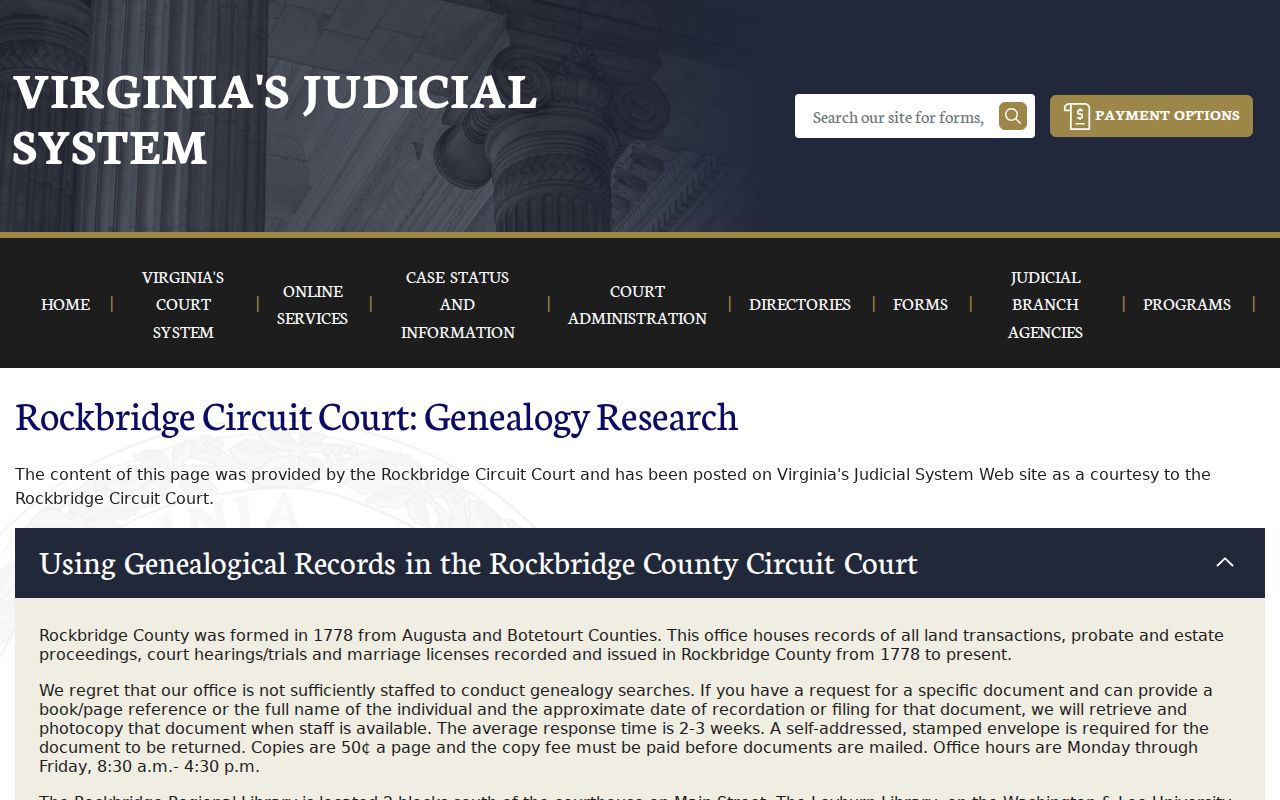
That history statement sets the county's record horizon. For any specific deed book or image, the Clerk's office gives the answer.
Walk Back Through Rockbridge County Deeds
A grantor conveyed the interest. A grantee received it. To walk the chain backward, treat the current grantee as the next earlier search name. Compare descriptions carefully. A same-name match may involve a different farm or lot, so follow book, page, and marginal references to the prior deed, release, or plat.
- Find the most recent deed and write down the grantee, grantor, legal description, and record reference.
- Search the grantor as a prior grantee and match the land description.
- Continue one transfer at a time, noting corrections, releases, probate orders, and plats.
- When online years stop, ask the Clerk about the cited deed book or microfilm.
- Grantor and grantee
- Parties named as transferring and receiving an interest.
- Chain of title
- The ordered series of recorded instruments tied to the same land.
- Legal description
- The lot, block, or boundary text used to match land across older records.
- Quitclaim and warranty
- Different deed forms; read the actual instrument rather than assuming the label proves a title guarantee.
Rockbridge County's 1778 Record Start
Rockbridge County was organized in 1778 from Augusta and Botetourt Counties. The Clerk holds land, probate, court, and marriage records from that date forward. That speaks to custody only. Nothing guarantees full indexing. Nothing guarantees that every deed survived. The remote index and image cutover dates remain questions for the Clerk.
Lawful use. Rockbridge County former-owner research is for property diligence, house history, and family history. Do not use old or current records to track, harass, intimidate, or harm a living person.
Rockbridge County Online Cutoff
The Clerk's local record span opens in 1778. No county-specific SRA cutoff is published. Do not write a year into your ownership timeline until the Clerk confirms it. A free index result can exist while image viewing stays restricted by subscriber terms or local authorization. Ask three questions before assuming an older deed is missing. Is the needed year indexed? Can an image be opened at a courthouse terminal? If not, which book and page do you request? The Virginia SRA page notes that some localities offer index-only access, while images can require an agreement and fees. The state SRA portal explains the remote access model, but the local Clerk controls Rockbridge coverage.
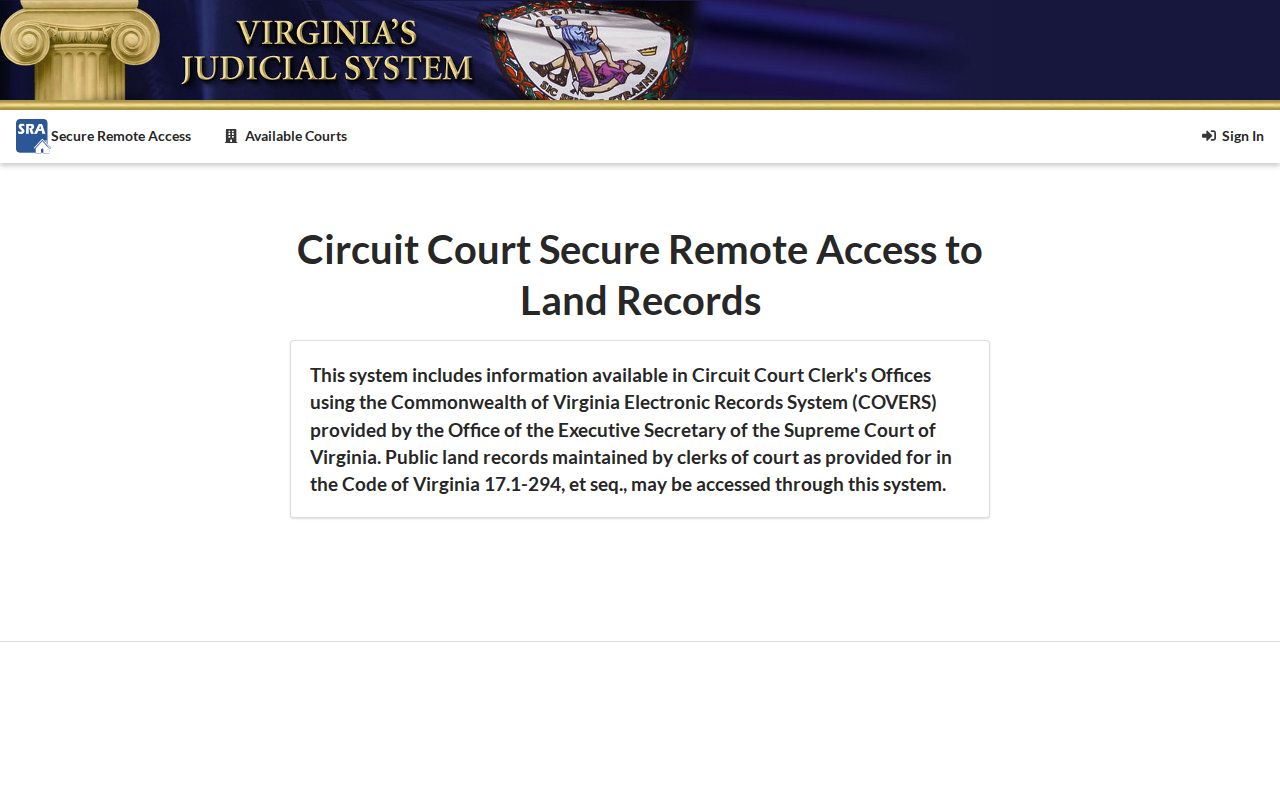
Start from the portal's landing page. Then confirm Rockbridge County's local range before concluding an older deed is missing.
Rockbridge County Probate Chain Breaks
Probate can interrupt a sale-to-sale sequence. A will or court order can pass land to heirs, and an executor or administrator deed may later convey it to a buyer. The Clerk's probate files explain why a tax account shifts from a person's name to an estate or heir group. Search the estate and land record together. Match the property description across both. Marriage records help separate same-name people. The Clerk notes that pre-1977 Virginia licenses generally came from the clerk where the bride resided, and some mid-1800s entries are consent forms rather than modern applications. Treat these as family context, not proof of a parcel transfer. Estate distributions need three entries. Record the order, the deed, and the final grantee as separate events in your ownership timeline.
Rockbridge County Vital Record Gaps
The county's birth and death registers ran from 1853 to 1896. Deaths from 1871 through 1896 do not exist. Early entries can be incomplete. Expect unnamed infants, month-only dates, missing parents, or vague causes. A register gap proves nothing. It does not prove the owner was alive. Virginia vital records open on their own schedule, and birth records become public after 100 years, with death, marriage, divorce, and annulment records opening after 25, subject to exceptions and redactions. Certified copies generally require eligible family status, identification, and a $15 VDH fee, while the VDH access rules distinguish a public index from a certified copy.
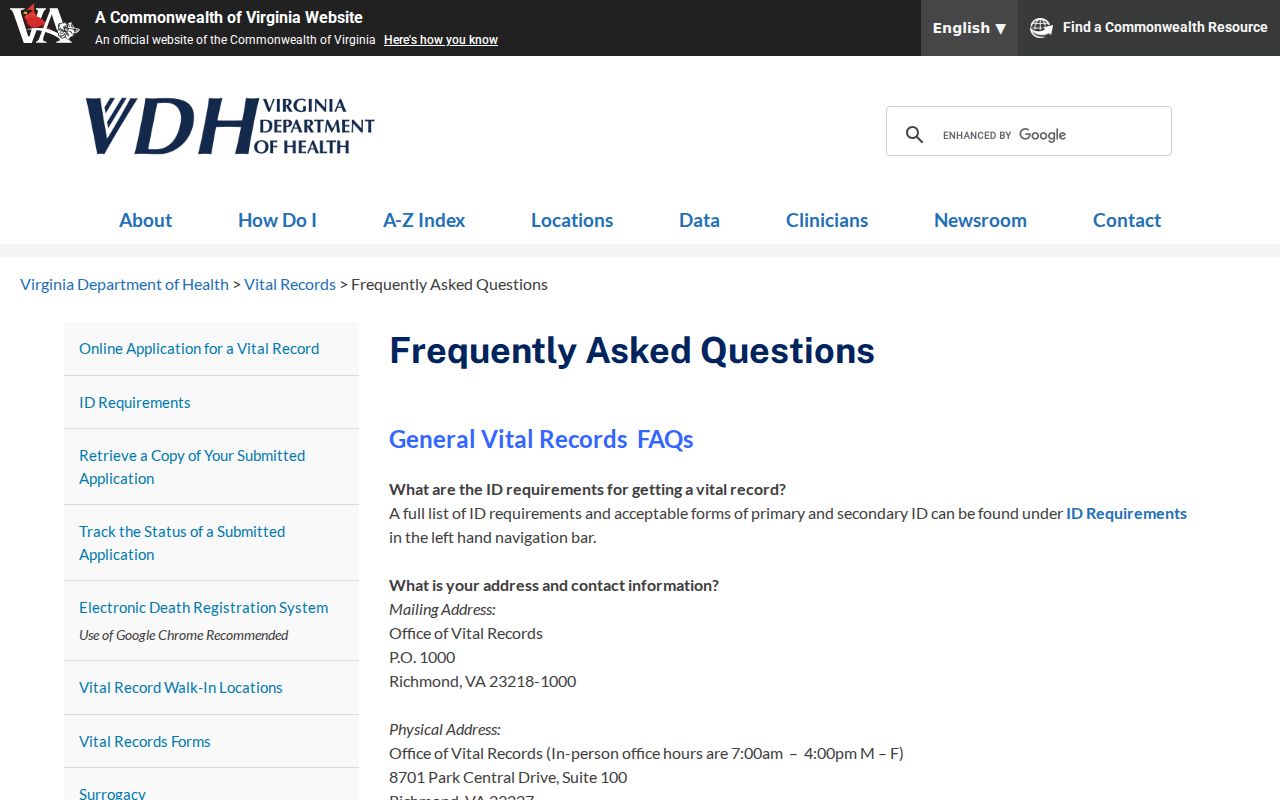
Trust the deed or the will, not the register, for the transfer.
Rockbridge County Library Sources
Rockbridge Regional Library's local-history collection covers the county along with Lexington, Buena Vista, Goshen, and Glasgow. Its written policy promises no complete directory, reverse directory, obituary file, or newspaper run. Ask staff about coverage first. Build no ownership chain from one secondary source.
The library sits two blocks from the courthouse. Pair a Clerk book reference with local history there. The Historical Society's rare papers, photographs, and genealogical resources are cataloged at Washington and Lee University's Special Collections. The Clerk also points researchers to Leyburn Library as a resource.
The Rockbridge Regional Library catalog and the Historical Society collection description are the natural entry points. Both catalogs point toward historic context.
Confirm each collection and year run with staff.
Rockbridge County Archive Route
The Library of Virginia's catalog and archives are a separate path from county deed books. Permanent state records may transfer there. Holdings vary by collection. The Rockbridge Historical Society's materials at Washington and Lee add photographs and family context, but they do not replace the recorded chain.
Rockbridge was formed from Augusta and Botetourt. Older chains start in a predecessor county. Search those records, relevant state collections, and the Clerk's books together. No courthouse loss or WPA project marks its record.
The Library of Virginia archive catalog is the state-level starting point for older collections.
Keep archival references distinct from a deed book citation. Each source gets checked at its own custodian.
A gap in an online sequence does not by itself mean a deed was never recorded. The statewide SRA landing page lists no Rockbridge-specific year cutoff or missing-book period. It lists no index conversion date either. Chains jump sometimes. When one does, ask the Clerk to check the physical index or book. Name the prior owner as grantor. Name the expected successor as grantee. A narrow date range and legal description help staff locate the conveyance efficiently.
Rockbridge was formed from Augusta and Botetourt. A deed made before county formation may be indexed in a predecessor jurisdiction instead. Later estate papers, wills, and court orders can explain how a tract moved between heirs. Search the local deed record for the actual land conveyance. Probate and historical collections fill in people and dates. The land index alone cannot resolve every ownership question. Together they trace both the land and the people behind it.