
Rockbridge County Deed Types
A deed passes an interest in land once it is executed and recorded. Not every filing in the index is a sale. A release or satisfaction can shape a Rockbridge County parcel just as much as the debt it settles. Read title, parties, description, and later references together.
| Deed Type | What It Does | Common Use |
|---|---|---|
| Conveyance deed | Transfers the grantor's stated interest to a grantee | Follow a sale, gift, or other transfer |
| Correction deed | Corrects a prior recorded instrument | Reconcile a name or description change |
| Deed of trust | Records a security interest in land | Check debt and any later satisfaction |
| Release or satisfaction | Shows a recorded lien release | Confirm whether a later instrument cleared it |
| Plat | Shows lot layout or a subdivision change | Match a lot and block to the deed |
A deed of trust secures a debt; it is not the conveyance deed. A lis pendens flags a pending case. The final order or a later release shows how it ended. Rockbridge's Clerk lists land transactions from the county's 1778 formation to the present. The exact online image cutoff is not published. The Circuit Clerk's land and genealogy page describes local records and copy requests.
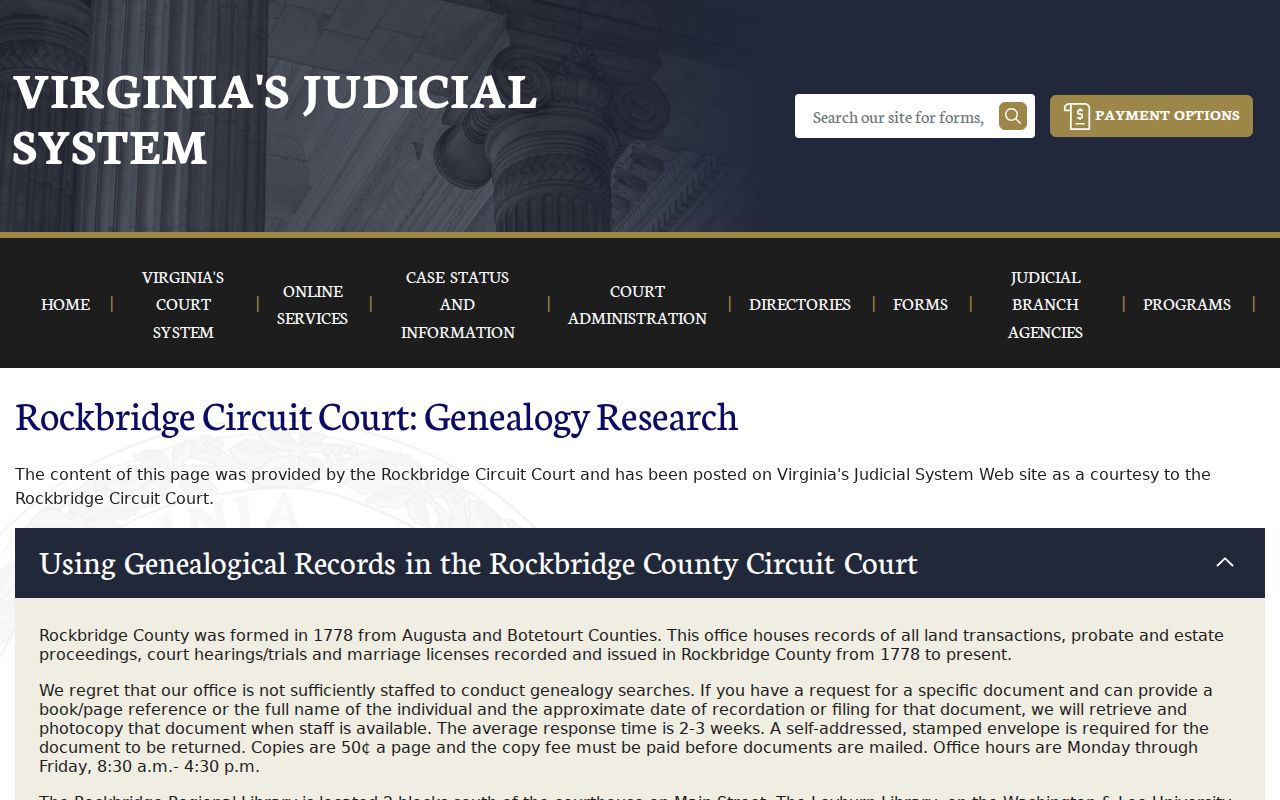
Treat the 1778-to-present custody statement as a research horizon. Then ask the Clerk which Rockbridge County deed volumes and images are actually available online.
Trace Rockbridge County Parties
A grantor conveys the interest in land, and the grantee receives it. Start with one known party and a likely period. Then match book/page and legal description across every instrument. Names alone can mislead. Relatives share names, estates complicate chains, and a correction deed can change a description, so check that the grantee on one deed reappears as grantor on the next.
- Search the latest known owner as grantee in Virginia SRA/COVERS.
- Record the grantor, recording date, instrument type, and land description.
- Search the grantor as a prior grantee and compare the property description.
- Follow book/page and marginal references, then ask the Clerk about earlier books if the online years stop.
- Grantor
- The party named as conveying an interest in an instrument.
- Grantee
- The party named as receiving that interest.
- Chain of title
- The sequence of recorded transfers tied to one legal description.
- Book/page and instrument number
- Two reference types to ask the Clerk about when locating a filing.
Rockbridge County SRA Image Access
Virginia's Secure Remote Access system, known as SRA/COVERS, opens land-record indexes remotely wherever a Clerk enables it. Index-only access may be free. Images often take more: a subscriber account, Clerk authorization, a signed agreement, and fees. Rockbridge publishes no online cutoff or image range. Confirm both before relying on a remote search.
An index hit and a readable image sit at separate access levels. Not every search field appears on the public page. Party names, document type, recording date, book/page, instrument number, and legal-description cross-reference are fields to ask about, so save any index reference for the Clerk or a local terminal search.
The Virginia SRA/COVERS portal is the remote entry point. Its public page describes access terms, not a sample Rockbridge deed.
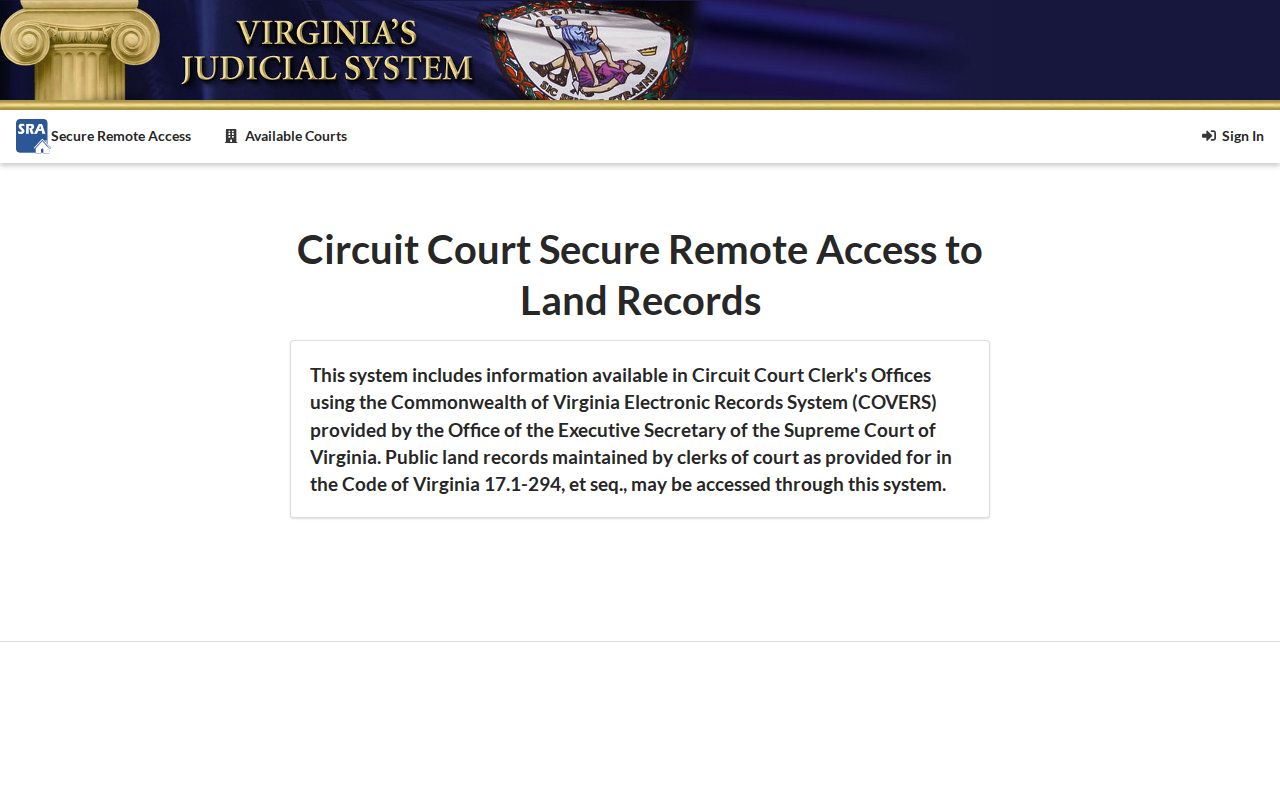
An index hit is not an image. Ask the Rockbridge County Clerk whether a blocked image can be viewed locally or requested by book and page.
Rockbridge County's Older Deed Books
Rockbridge County formed in 1778 from Augusta and Botetourt Counties, and the Clerk's custody statement starts there. The online SRA cutoff is not published. For a chain reaching past the remote index, ask the Clerk which deed book, grantor-grantee volume, or microfilm covers the date.
Other archives fill the gaps. The Library of Virginia holds archival catalogs and early Virginia material. Rockbridge Regional Library keeps the county's local history. The Historical Society's rare papers, photographs, and genealogical resources are cataloged at Washington and Lee Special Collections. No collection is complete.
Use the Library of Virginia catalog to locate state-held material. Old deeds rarely carry street addresses. Note the old parcel description and its adjoining owners instead.
Follow the chain backward from a known deed. A Rockbridge County formation date is not proof that every record survived.
Rockbridge County Estate Conveyances
A transfer after death rarely looks like a sale. It may surface as an executor's deed, deed of distribution, list of heirs, will, or court order explaining how the land moved. The Circuit Court Clerk holds probate and estate proceedings from 1778 onward. Search the person's name and likely estate year. Then match the described land to the parcel rather than trusting a family name.
Birth and death registers add context, with limits. The Clerk reports Rockbridge births from 1853 through 1896. Deaths for 1871 through 1896 do not exist. Virginia keeps vital-record access separate: births become public after 100 years, while death, marriage, and divorce records generally open after 25 years under Code §32.1-271.
Probate shows how land moved with no ordinary sale. For the full prior-owner chain, pair the former-owner deed timeline with probate records.
The Virginia Department of Health's vital-record guidance explains access periods for certificates. Treat them as family context, not deeds.
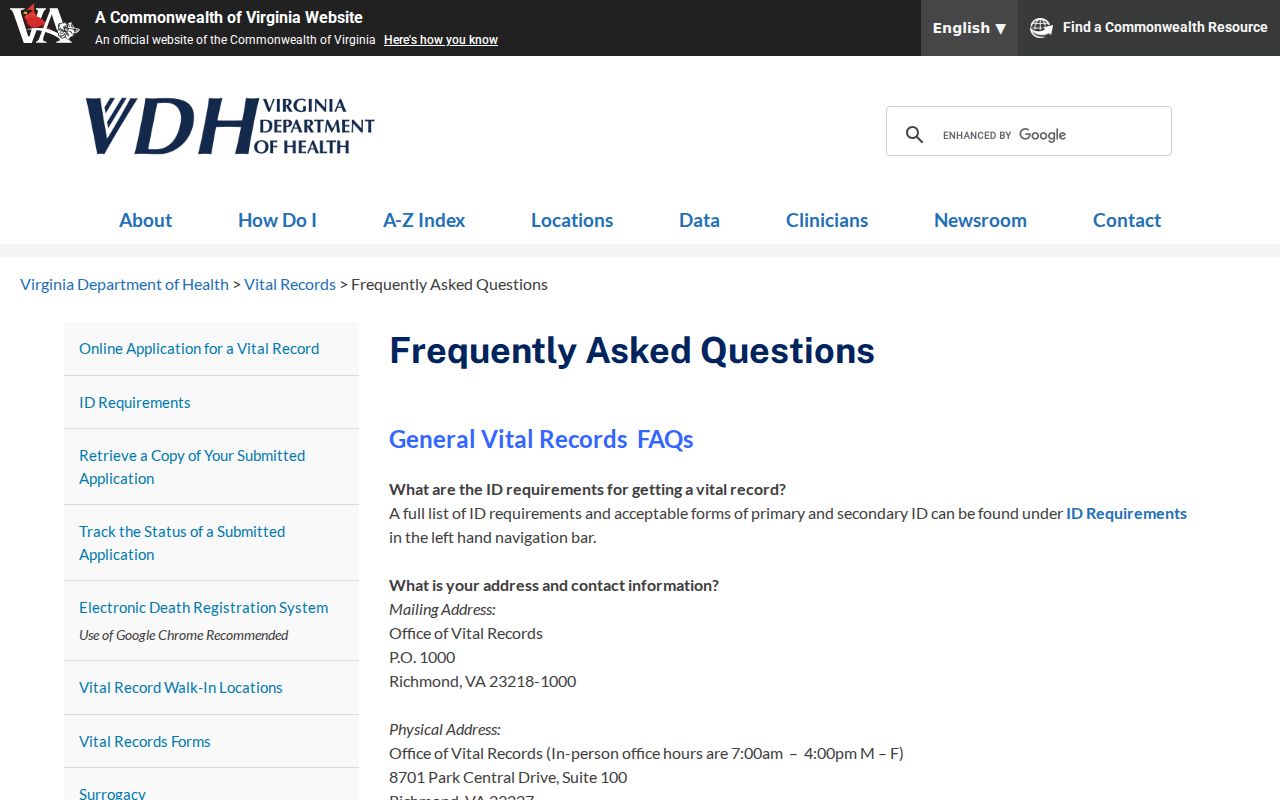
A restricted certificate is not a deed. Use it for eligible family context, and confirm the Rockbridge County transfer with the Clerk's land instrument.
Request a Rockbridge County Deed Copy
Mail is a workable route when a deed image is not online. Give the Clerk the full name. Add a rough filing date and the book/page if you have it. Staff cannot dig through broad family-history searches. Expect a reply in two to three weeks. Copies run 50 cents per page, and you pay before the copy is mailed. Tuck a self-addressed stamped envelope into the envelope too.
Prefer to search yourself? Ask the Circuit Court Clerk about the local terminal. Ask about the current rules for opening images as well. The office sits at 20 South Randolph Street, Suite 101, Lexington. Doors open at 8:30 Monday through Thursday and close at 4:30. Friday hours run 8:30 to 4:00. Call ahead on certified-copy fees and any remote image charges. The office's current fee schedule governs.
Recorded is not a title opinion. A Rockbridge County deed record proves that an instrument was recorded, not that title is clear or every claim has been found. Check later deeds, releases, easements, court orders, and the legal description with the proper professional.
Rockbridge County Court Filings and Deeds
Court cases can leave marks on land. Foreclosures, quiet-title suits, partitions, boundary disputes, easements, and mechanic's liens can all touch a parcel. Tax-collection matters can too. Virginia's public court pages do not expose a confirmed Rockbridge case-search form with exact fields. The dependable route is the Clerk's public counter or terminal. Bring a party name, a case number if known, and an approximate filing year.
A docket entry is not a verdict. Read the final order first. Then check whether a release, satisfaction, cancellation, or deed was recorded to finish the story. Federal bankruptcy or property litigation may surface through PACER. That system is separate from the local land index, with its own federal access charges. The PACER federal court gateway can locate those cases. A recorded Rockbridge instrument may still be needed to establish the local land-record trail.
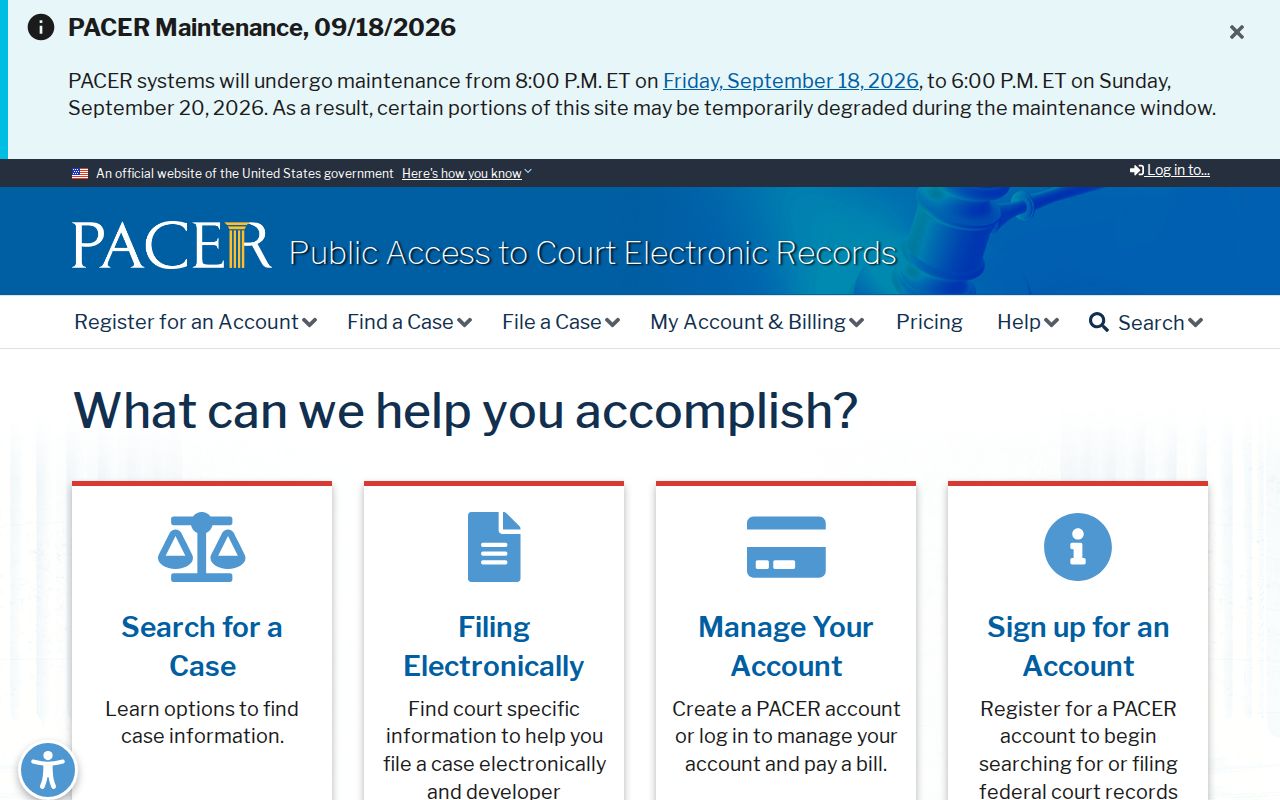
Keep the docket, the final order, and the recorded deed as three distinct documents in one property file.
Details for a Rockbridge County Copy Request
A focused request works best. Clerk staff do not run open-ended genealogy searches. Give them the names exactly as written, an approximate date, the instrument type if known, and the parcel's legal description or book/page. Say whether you want a plain copy or a certified one. Ask too whether the current fee differs from the documented mailed-copy rate.
The Clerk sits at 20 South Randolph Street, Suite 101, Lexington, Virginia 24450, and lists 540-463-2232. Hours are 8:30 to 4:30 Monday through Thursday and 8:30 to 4:00 Friday. Mail requests average two to three weeks. The mailed genealogy procedure asks for a self-addressed stamped envelope and payment of the 50-cent per-page fee before the copy goes out.
When a deed image appears in SRA, compare the scanned document against its index entry. A missing online year is not a dead end. A book/page reference gives any counter or mail request a clear target.
Read a deed as a dated instrument with named parties and a legal description. It is not a stand-alone certificate of present ownership. A later deed, corrective instrument, court order, or estate conveyance can shift the chain. Follow the grantor and grantee names across successive records. Check the parcel description each time. Note any exception or reservation rather than stopping at the newest index hit.
Rockbridge's Clerk traces its land records from 1778 to the present. The local online cutover and the set of images openable remotely remain unannounced. The statewide SRA portal is only an access route. It does not confirm that every Rockbridge book, year, or image is online. When a result lacks a scan, use the instrument number or book/page in a targeted request. Ask whether an in-person visit, copy fee, or approval applies.
Keep related records in their proper roles. A probate file may establish an executor's authority or explain heirship. The deed or court order documents the transfer itself. Federal case records may hold a bankruptcy or lien filing. The public land record and any release still determine what was recorded against the parcel. These are complementary checks, not substitutes for tracing the conveyance through the Clerk's index.